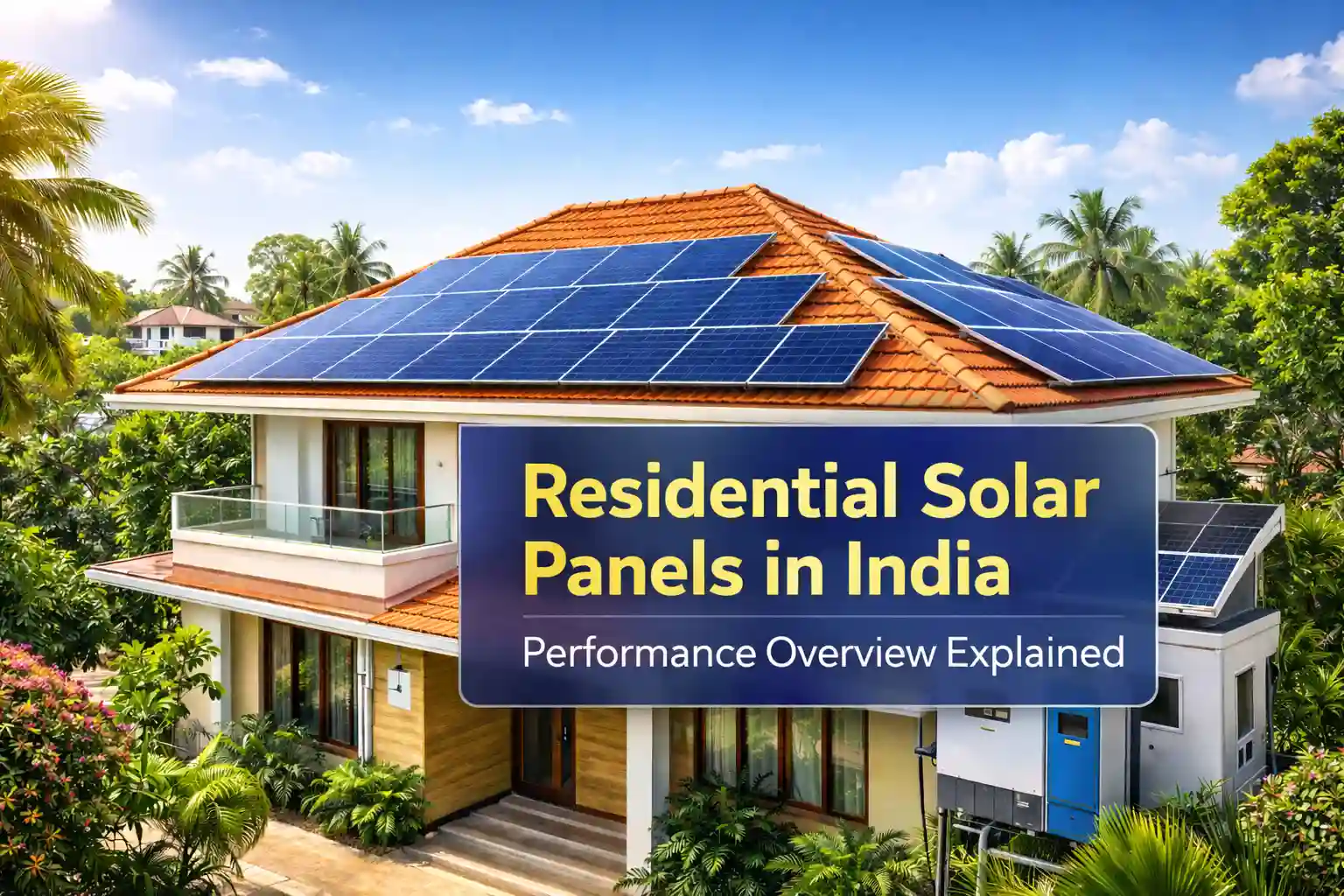
Residential solar panels in India have moved far beyond being a niche technology. Today, they sit on rooftops in cities, towns, and villages, quietly generating electricity while homeowners go about their daily routines. What once felt experimental now feels practical and for good reason.
Still, many homeowners hesitate before installing solar panels. The biggest question is not about cost anymore. It is about performance. People want to know how well residential solar panels actually work in Indian conditions. Do they perform reliably throughout the year? How much electricity do they produce? And what factors affect their output?
This article answers those questions with clarity and honesty. It explains how residential solar panels perform in India, what influences their efficiency, and what homeowners should realistically expect without exaggeration or technical confusion.
Why Solar Panel Performance Matters More Than Installation
Installing solar panels is a one-time event. Performance, however, determines value over decades.
A well-performing system:
- Reduces electricity bills consistently
- Delivers predictable long-term savings
- Supports grid stability through net metering
- Builds trust in renewable energy adoption
Poor performance, on the other hand, leads to disappointment even if the panels look impressive on the roof.
That is why understanding performance before installation matters more than glossy brochures.
India’s Solar Potential: A Strong Foundation for Performance
India sits in a favorable solar belt and receives abundant sunlight across most regions. This natural advantage directly affects residential solar panel output.
According to the Ministry of New and Renewable Energy, most parts of India receive 4–7 kWh of solar radiation per square meter per day. This level of solar exposure supports efficient rooftop electricity generation for homes.
Simply put, India offers enough sunlight to make residential solar panels perform reliably for most of the year.
What Determines the Performance of Residential Solar Panels?
Solar panel performance does not depend on a single factor. It results from several interconnected elements working together.
Key performance drivers include:
- Panel technology and efficiency
- Location and solar irradiance
- Roof orientation and tilt angle
- Installation quality
- Maintenance practices
Ignoring even one of these factors can reduce overall output.
Solar Panel Technologies Used in Indian Homes
Most residential installations in India use either monocrystalline or polycrystalline solar panels.
Monocrystalline Solar Panels
These panels use single-crystal silicon and offer higher efficiency.
Performance characteristics:
- Better output in limited roof space
- Strong performance in high temperatures
- Higher cost compared to alternatives
Urban homes often prefer monocrystalline panels due to space constraints.
Polycrystalline Solar Panels
These panels use multiple silicon crystals.
Performance characteristics:
- Slightly lower efficiency
- Reliable output under standard conditions
- More affordable pricing
Both technologies perform well in India when installed correctly. The difference mainly affects space usage rather than energy reliability.
How Much Electricity Do Residential Solar Panels Generate in India?
This question matters most to homeowners.
On average:
- A 1 kW residential solar system generates 4–5 units of electricity per day
- Annual generation ranges between 1,400–1,800 units, depending on location
These estimates align with performance benchmarks published by MNRE and state renewable energy agencies.
Actual output varies by region, but reputable installers calculate expected generation during system design.
Seasonal Impact on Solar Panel Performance
India experiences distinct seasons, and each one affects solar output differently.
Summer Performance
Summer delivers the highest generation levels due to longer daylight hours. Panels may experience slight efficiency drops at high temperatures, but overall output remains strong.
Monsoon Performance
Solar panels continue generating electricity during monsoon months, even with cloud cover. Diffused sunlight still produces power, though output may reduce temporarily.
Winter Performance
Cooler temperatures improve panel efficiency. Shorter daylight hours slightly reduce daily output, but performance remains stable.
Across the year, seasonal variations balance out rather than disrupt annual generation.
Roof Orientation and Tilt: Silent Performance Boosters
Correct roof orientation plays a major role in performance.
In India:
- South-facing roofs deliver the highest output
- East-west configurations still perform well with proper design
Tilt angle also matters. Installers adjust angles based on latitude to maximize sunlight exposure throughout the year.
A well-planned orientation often improves performance more than upgrading to costlier panels.
Installation Quality and Its Direct Impact on Output
Even the best solar panels underperform if installed poorly.
Performance suffers when:
- Panels face partial shading
- Wiring losses occur due to poor layout
- Inverter capacity does not match system size
Government-backed installations follow technical standards defined by MNRE, which helps ensure reliable long-term performance.
Choosing experienced installers remains one of the smartest performance decisions a homeowner can make.
Inverters: The Performance Translator
Solar panels generate direct current (DC), but homes use alternating current (AC). The inverter performs this conversion.
Modern inverters:
- Optimize energy conversion
- Monitor system health
- Protect against grid fluctuations
An efficient inverter ensures that generated solar power reaches home appliances with minimal loss.
Net Metering and Performance Visibility
Net metering allows homeowners to measure actual performance in a transparent way.
Through net metering:
- Excess solar power flows to the grid
- Exported units offset imported electricity
- Monthly bills reflect net usage
Net metering regulations operate under guidelines issued by the Central Electricity Regulatory Commission, with implementation handled by state utilities.
This system makes performance measurable rather than theoretical.
Performance Degradation Over Time: What to Expect
Solar panels do not stop working suddenly. Their output declines gradually.
Industry-backed data shows:
- Average degradation of 0.5%–0.8% per year
- Panels retain around 80% efficiency after 25 years
Manufacturers provide long-term performance warranties to reflect this predictable decline.
This slow reduction still allows solar panels to remain productive for decades.
Dust, Pollution, and Performance in Indian Conditions
Dust accumulation is one of the most practical performance challenges in India.
Dust affects output by:
- Blocking sunlight
- Increasing surface reflection
Regular cleaning restores lost efficiency. In most regions, cleaning panels every few weeks maintains optimal performance.
The solution remains simple, not technical.
Residential Solar Panels During Power Cuts
Grid-connected systems shut down during outages for safety reasons. However, hybrid systems with batteries continue supplying power.
Performance during outages depends on:
- System type
- Battery capacity
- Load management
Battery-backed systems improve reliability but increase upfront cost.
Comparing Residential Solar Performance Across Indian Regions
Performance varies slightly across regions due to sunlight availability.
General trends:
- Western and southern states show higher annual output
- Northern regions perform well with seasonal balance
- Coastal areas require corrosion-resistant mounting
Despite differences, residential solar remains viable across most of India.
Government Standards That Protect Performance
Government-approved installations follow defined quality standards.
These include:
- Certified panels and inverters
- Electrical safety compliance
- Performance testing
MNRE guidelines ensure that residential solar systems meet minimum output and safety benchmarks.
Performance vs. Electricity Bill Reduction
Solar performance directly reflects on electricity savings.
Homes with properly sized systems often:
- Reduce bills significantly
- Offset daytime electricity usage
- Gain predictable monthly savings
Savings depend more on system sizing and consumption patterns than on panel brand alone.
Monitoring Performance: Tools Available to Homeowners
Most modern systems include monitoring features.
These tools show:
- Daily generation
- Monthly trends
- System alerts
Performance transparency builds confidence and helps identify issues early.
Common Performance Myths Explained Simply
Myth: Solar panels stop working on cloudy days
Fact: They generate electricity from diffused sunlight
Myth: High temperatures destroy panel efficiency
Fact: Panels handle heat well with minor efficiency variation
Myth: Solar panels require constant supervision
Fact: Systems operate automatically with minimal attention
Facts outperform fear every time.
Long Term Reliability of Residential Solar Panels
Residential solar panels rank among the most reliable home technologies.
They:
- Have no moving parts
- Operate silently
- Resist environmental stress
Their simplicity contributes directly to stable performance over time.
Environmental Performance Without Overstatement
Residential solar panels reduce dependence on fossil fuel-based electricity. While one home does not transform the grid alone, collective adoption creates measurable benefits.
Government performance targets focus on scale, not symbolism.
Trusted Sources for Performance Data
For accurate and updated information, rely on:
- MNRE publications
- National solar portals
- State renewable energy agencies
- Utility performance guidelines
These sources publish verifiable data backed by field implementation.
Final Thoughts
Residential solar panels in India perform reliably because they operate within favorable solar conditions, clear government standards, and proven technology. Their performance depends less on marketing claims and more on planning, installation quality, and basic maintenance.
When homeowners understand how performance works, expectations stay realistic. And realistic expectations lead to long-term satisfaction.
Solar panels do not promise magic. They deliver consistency. And in household energy planning, consistency matters more than excitement.