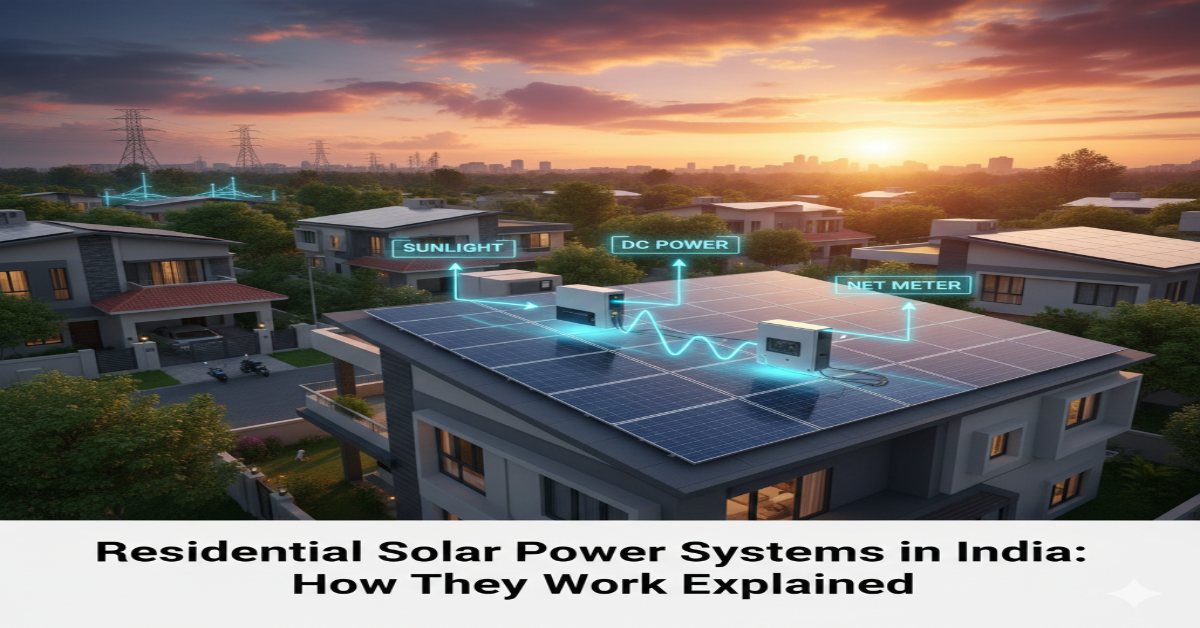
Electricity bills in India have one special talent: they keep rising quietly while we are busy with life. Add frequent power cuts in some regions and growing concerns about energy security, and suddenly solar power does not feel like a luxury anymore. It feels like a smart household decision.
Residential solar power systems are no longer limited to a few eco-enthusiasts. Across India, homeowners are installing rooftop solar panels to reduce bills, gain energy independence, and make practical use of abundant sunlight. But many people still hesitate because they do not fully understand how these systems work.
This guide explains residential solar power systems in India, step by step, in simple language. No technical overload. No marketing hype. Just clear logic, verified facts, and honest explanations.
Why Residential Solar Power Is Growing Rapidly in India
India receives high solar radiation for most of the year. Many regions enjoy over 300 sunny days annually. Ignoring that natural advantage would be like leaving free fuel unused on the roof.
Several real-world factors are pushing homeowners toward solar energy:
- Rising grid electricity tariffs
- Improved affordability of solar panels
- Government support and policy backing
- Better awareness of long-term savings
According to official data from the Ministry of New and Renewable Energy, rooftop solar plays a key role in India’s renewable energy targets. Residential installations form a growing share of this push.
Solar power is no longer experimental. It is stable, regulated, and technically mature.
What Is a Residential Solar Power System?
A residential solar power system converts sunlight into usable electricity for homes. It works silently, sits neatly on rooftops, and requires minimal daily attention.
At its core, the system performs three basic tasks:
- Captures sunlight
- Converts it into electrical power
- Supplies electricity to household appliances
Some systems also store excess energy or send it back to the power grid, depending on the configuration.
Main Types of Residential Solar Systems in India
Understanding system types is important because each one serves a different household need.
On-Grid Solar Power System
An on-grid system connects directly to the local electricity grid.
Key features:
- No battery storage
- Uses grid power when solar generation drops
- Exports excess electricity to the grid
This system works with net metering, where exported units reduce your electricity bill.
Most urban Indian homes choose this option due to lower upfront cost.
Off-Grid Solar Power System
An off-grid system operates independently from the grid.
Key features:
- Uses batteries for energy storage
- Suitable for areas with unreliable grid supply
- Higher initial cost due to batteries
This setup suits rural homes or locations with frequent outages.
Hybrid Solar Power System
A hybrid system combines grid connection and battery storage.
Key features:
- Solar power + battery + grid backup
- Higher flexibility
- Higher cost, but better reliability
Homeowners who want backup power without full off-grid dependency often choose this option.
Core Components of a Residential Solar Power System
Each component has a clear role. If one fails, the system efficiency drops.
Solar Panels
Solar panels capture sunlight and convert it into direct current (DC) electricity.
Most Indian homes use monocrystalline or polycrystalline panels. Monocrystalline panels offer higher efficiency and better performance in limited space.
Panels usually last 25 years or more, with gradual performance decline.
Solar Inverter
The inverter converts DC electricity into alternating current (AC), which household appliances use.
Modern inverters also:
- Monitor system performance
- Provide safety cut-offs
- Support grid synchronization
Inverters act like translators between solar panels and your home.
Mounting Structure
Panels need strong mounting structures to handle wind, rain, and heat.
Proper tilt and orientation:
- Improve energy generation
- Reduce dust accumulation
- Increase system lifespan
Installers design mounting angles based on geographic location.
Batteries (If Applicable)
Batteries store excess electricity for later use.
In India, lithium-ion batteries are gaining popularity due to:
- Higher efficiency
- Longer lifespan
- Faster charging
However, batteries increase system cost and maintenance requirements.
Net Meter
A net meter measures electricity imported from and exported to the grid.
It plays a central role in billing for on-grid systems.
State electricity distribution companies regulate net metering policies.
How a Residential Solar Power System Works Step by Step
Let us break the process into simple stages.
Step 1: Sunlight Hits the Solar Panels
When sunlight strikes the photovoltaic cells, it excites electrons inside the material. This movement generates DC electricity.
No moving parts. No noise. Just physics doing its job.
Step 2: Electricity Flows to the Inverter
The DC electricity travels through cables to the inverter. At this stage, it cannot power home appliances directly.
Step 3: Conversion from DC to AC
The inverter converts DC into AC electricity.
Once converted, the power becomes usable for lights, fans, refrigerators, and other household devices.
Step 4: Power Is Used by the Home
The home consumes solar electricity first. This reduces dependency on grid power immediately.
Step 5: Excess Power Is Exported or Stored
- In on-grid systems, surplus power flows to the grid
- In hybrid or off-grid systems, batteries store surplus energy
At night or during cloudy weather, the home draws power from the grid or batteries.
The system switches sources automatically. You do not need to press any buttons.
Net Metering in India
Net metering allows homeowners to receive credit for surplus electricity supplied to the grid.
Here is how it works:
- Your solar system generates more power than you consume
- Extra units go to the grid
- The net meter records exported units
- Your electricity bill deducts these units
Net metering policies differ slightly by state. However, most Indian states support residential net metering under clear regulatory frameworks.
Guidelines and updates come from the Central Electricity Regulatory Commission and state regulators.
How Much Power Can a Residential Solar System Generate?
Power generation depends on several measurable factors:
- System size (kW capacity)
- Location and solar irradiance
- Panel efficiency
- Installation quality
On average, a 1 kW rooftop solar system in India generates 4–5 units per day under standard conditions.
This figure aligns with estimates published by MNRE and state energy agencies.
Actual output varies, but reputable installers calculate expected generation during system design.
Rooftop Space Requirements Explained Simply
Many homeowners worry about roof size.
General estimate:
- 1 kW system requires around 80–100 square feet
- Shadow-free area matters more than total size
Flat roofs, sloped roofs, and terrace setups all work if installers plan correctly.
Cost of Residential Solar Power Systems in India
Prices depend on system type and component quality.
Approximate ranges:
- On-grid: Lower cost, no batteries
- Off-grid: Higher cost due to batteries
- Hybrid: Highest upfront investment
Costs have fallen significantly over the past decade due to improved manufacturing and supply chains.
Government programs like PM Surya Ghar Muft Bijli Yojana further reduce financial burden for eligible households.
Always verify subsidy eligibility through official channels or state DISCOM portals.
Government Support and Policy Framework
India’s residential solar sector operates under clear national and state policies.
Key areas of support include:
- Capital subsidies
- Net metering regulations
- Standardized technical guidelines
MNRE publishes technical standards to ensure system safety and performance.
These policies aim to protect consumers while encouraging adoption.
Installation Process: What Actually Happens
A typical installation follows these steps:
- Site inspection and roof assessment
- Load analysis and system sizing
- Design approval and paperwork
- Panel and inverter installation
- Electrical integration and safety checks
- Net meter installation and grid synchronization
Professional installers complete this process within a few days for most homes.
Maintenance Requirements for Home Solar Systems
Solar systems do not demand daily attention.
Basic maintenance includes:
- Cleaning panels every few weeks
- Monitoring inverter performance
- Checking wiring during annual inspections
Dust reduces output, so cleaning matters more in dry regions.
Most manufacturers offer warranties:
- Panels: 25 years performance warranty
- Inverters: 5–10 years
Common Myths About Residential Solar Power
Let us clear a few misunderstandings.
Myth: Solar panels do not work during monsoon
Reality: Panels generate power even in diffused sunlight
Myth: Solar systems require constant repairs
Reality: Well-installed systems need minimal maintenance
Myth: Solar power cannot run heavy appliances
Reality: Properly sized systems handle air conditioners and pumps
Facts matter more than fear.
Environmental and Financial Benefits Combined
Residential solar offers two major advantages:
Financial Benefits
- Reduced electricity bills
- Protection against tariff hikes
- Long-term return on investment
Environmental Benefits
- Lower carbon emissions
- Reduced fossil fuel dependency
- Cleaner local air quality
Solar power makes economic sense without requiring idealism.
Choosing the Right Installer Matters
System performance depends heavily on installation quality.
Choose installers who:
- Follow MNRE guidelines
- Offer transparent documentation
- Provide post-installation support
Avoid deals that sound too cheap to be true. Quality always shows over time.
Trusted Information Sources
For policy, standards, and verified data, refer to:
- Ministry of New and Renewable Energy (MNRE)
- Central Electricity Regulatory Commission (CERC)
- State DISCOM official websites
These sources publish updated and reliable information for homeowners.
Final Thoughts
Residential solar power systems in India work because they rely on simple science, structured policies, and practical economics. They do not promise miracles. They offer predictable savings, cleaner energy, and long-term stability.
When installed correctly, a solar system becomes a quiet contributor to your home. It does not demand attention. It just works day after day turning sunlight into something useful.